
Sterile processing
Bacteria and spores ride on every instrument that leaves the operating room. Too small to see. Too dangerous to ignore.
The container
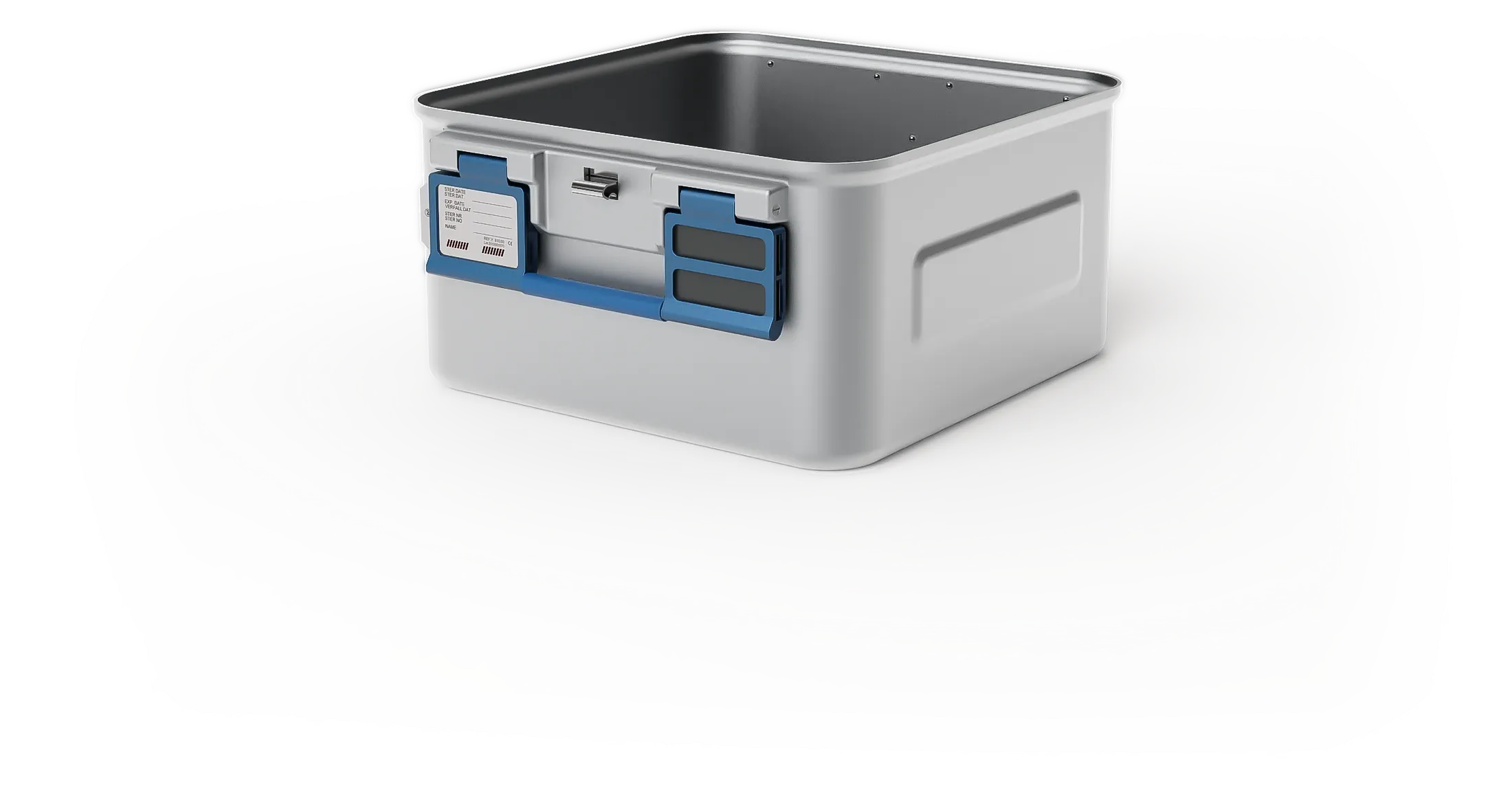

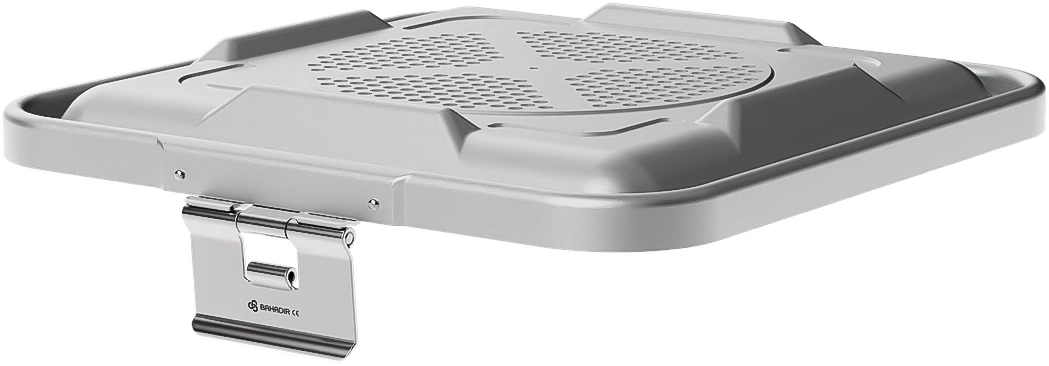

Anatomy of a container
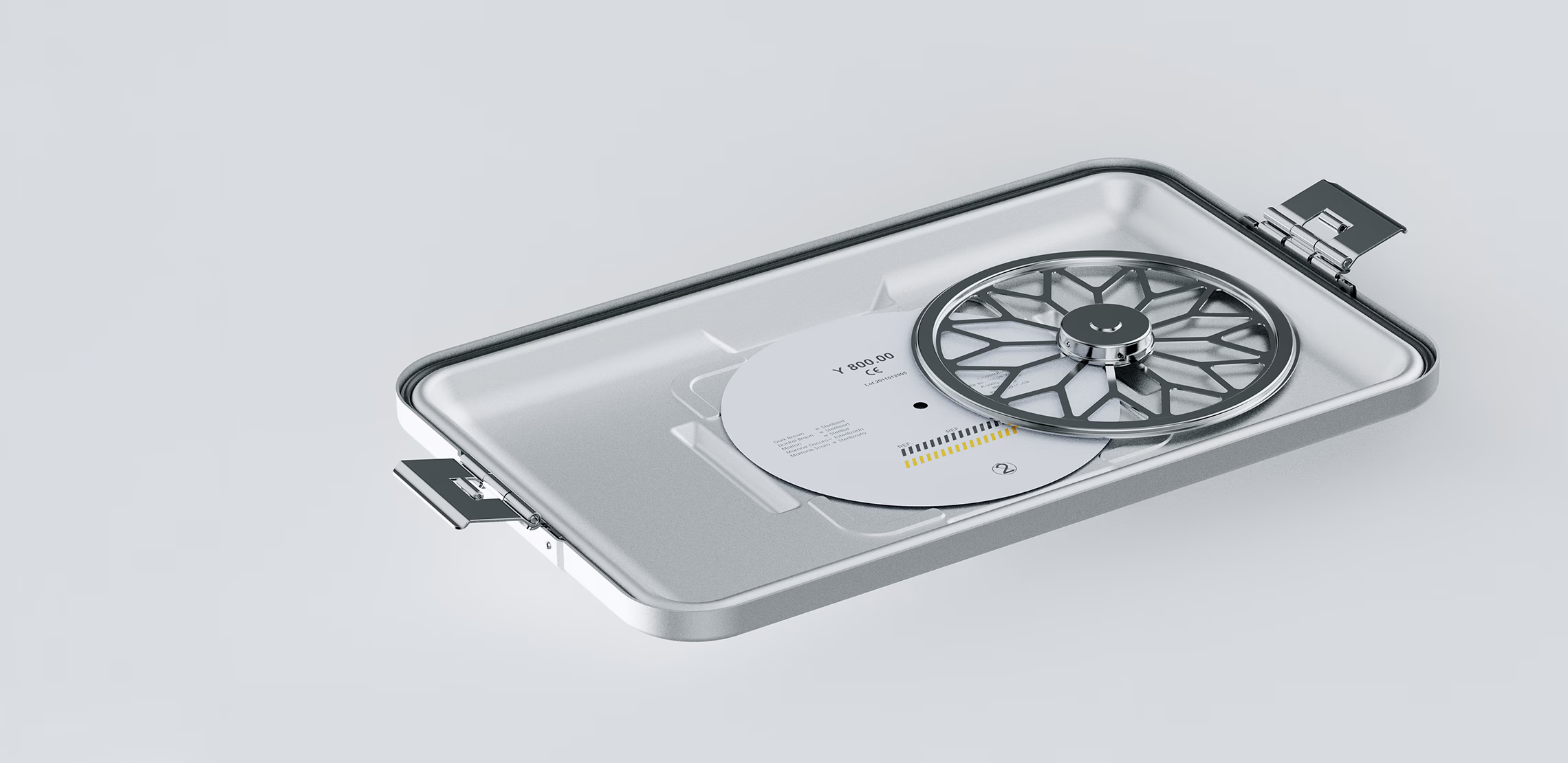
The lid seals. The filter lets steam in and keeps microbes out. The lock and seal prove the set hasn’t been opened since.
Sterilization
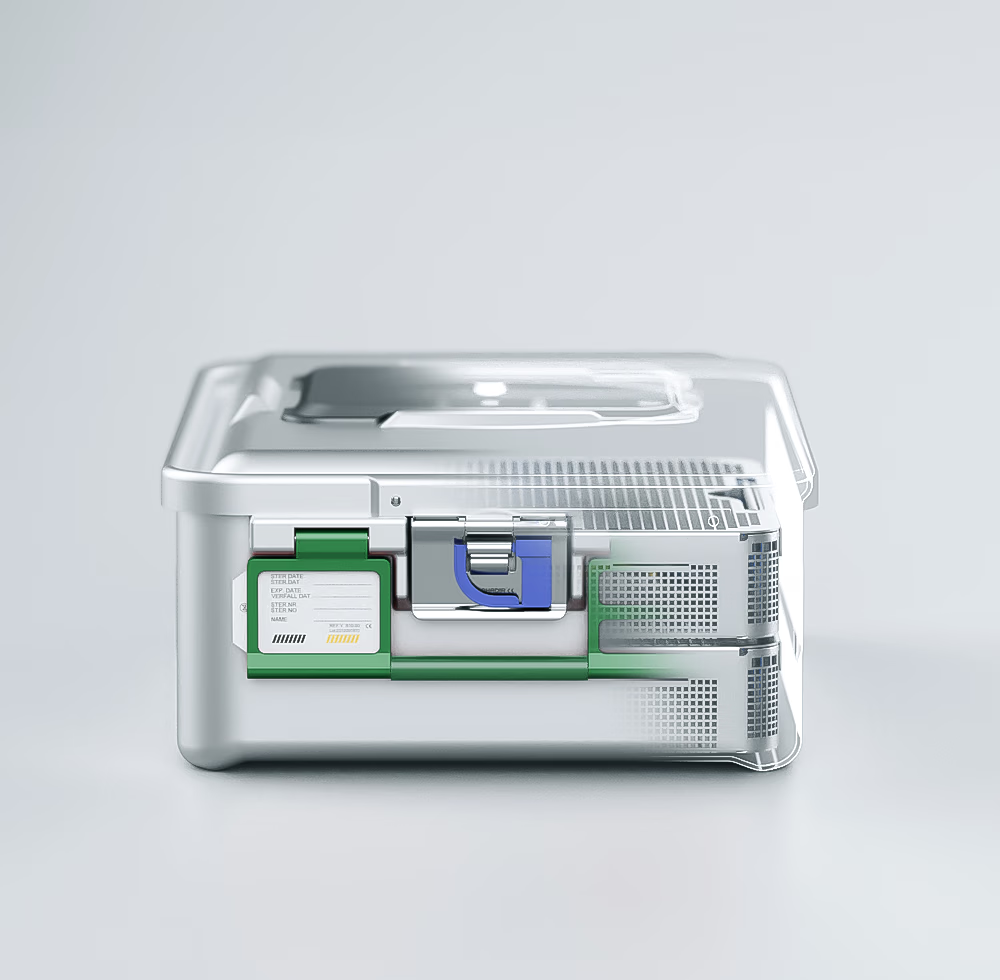
Steam destroys them.But the moment the cycle ends, the air outside is full of them again.Keeping a set sterile for months is a much older problem.
1859 · Paris
Louis Pasteur boiled broth in two flasks and left them open. One had a straight neck. The other, a long curved swan neck.
Straight neck
Microbes drifting in the air fell straight in. Within days the broth was alive with them.
Swan neck
Air still reached the broth. The microbes didn’t. They settled in the bend of the neck and stayed there. No filter, no seal. Just geometry.
Bio-Barrier
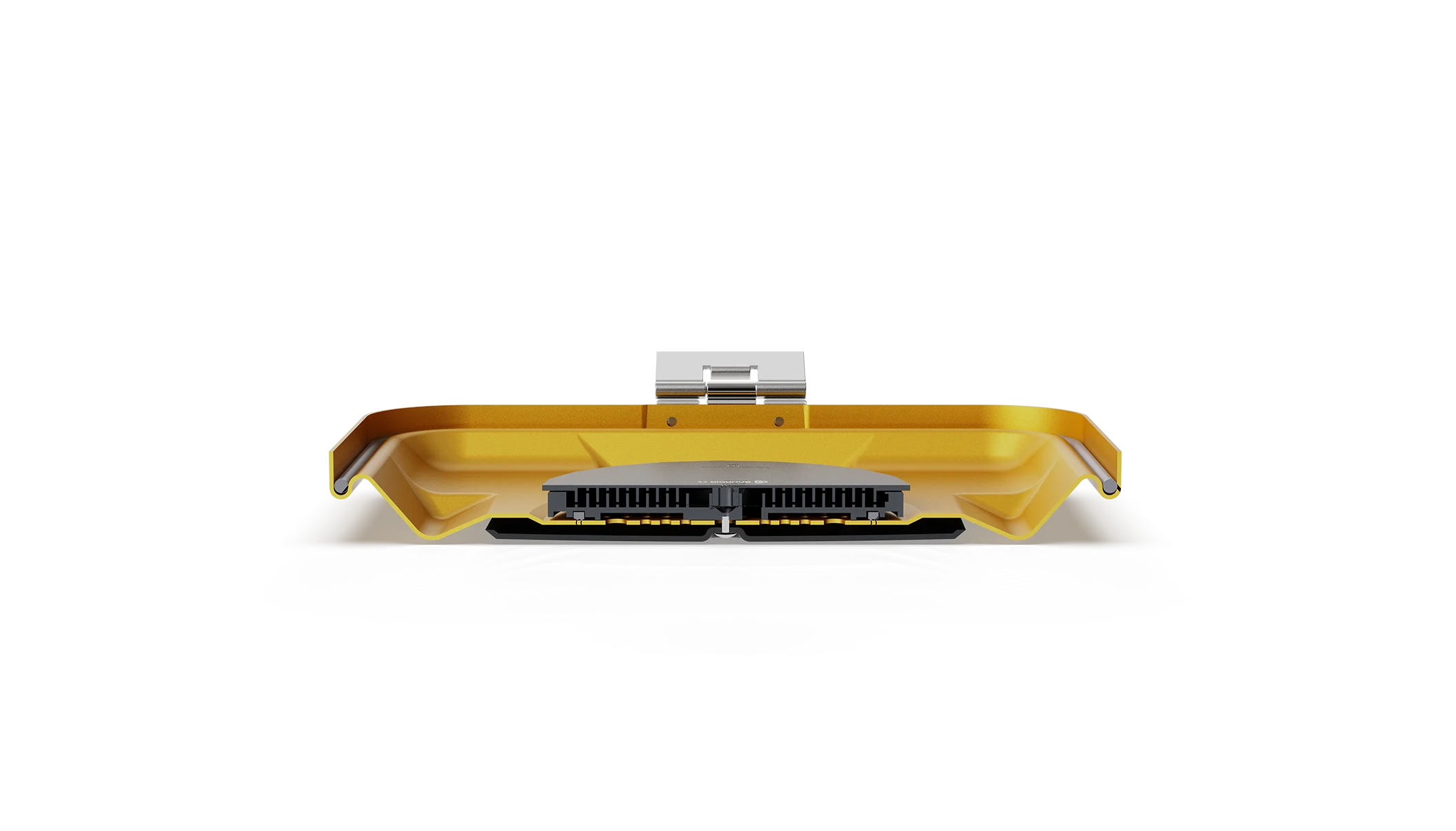
The Bio-Barrier lid carries Pasteur’s idea inside: a labyrinth of anodized aluminum between the outside air and your instruments.
Inside the lid
Every turn of the labyrinth changes the speed of the air. In the bends, the flow almost stops.
Low-flow zones
Where the flow slows, microorganisms drop out of the air and stay trapped. Only clean air reaches the instruments.
Filter & barrier systems
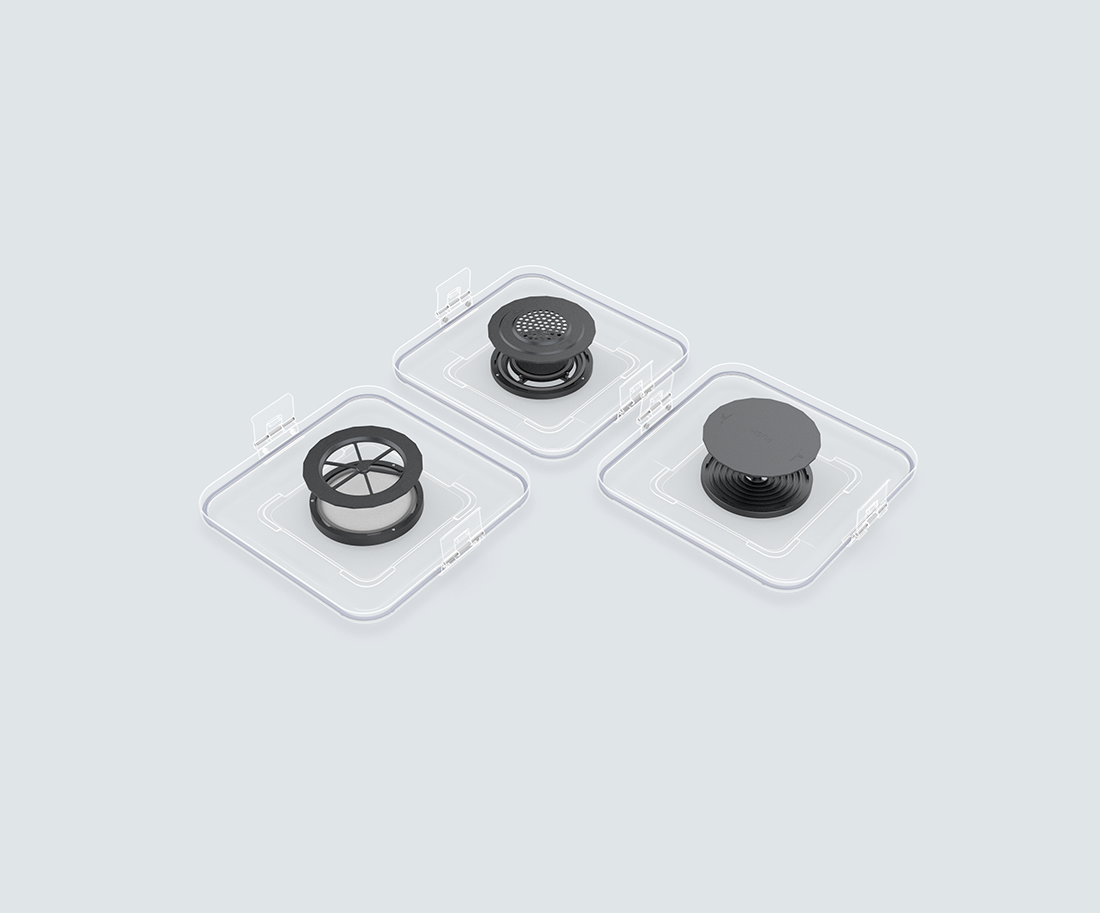
Reusable barrier systems
Low-temperature sterilization
Optics, cameras and delicate electronics are sterilized with hydrogen peroxide (H₂O₂) vapor at low temperature instead of steam. Bahadır containers are built for both.
The cycle
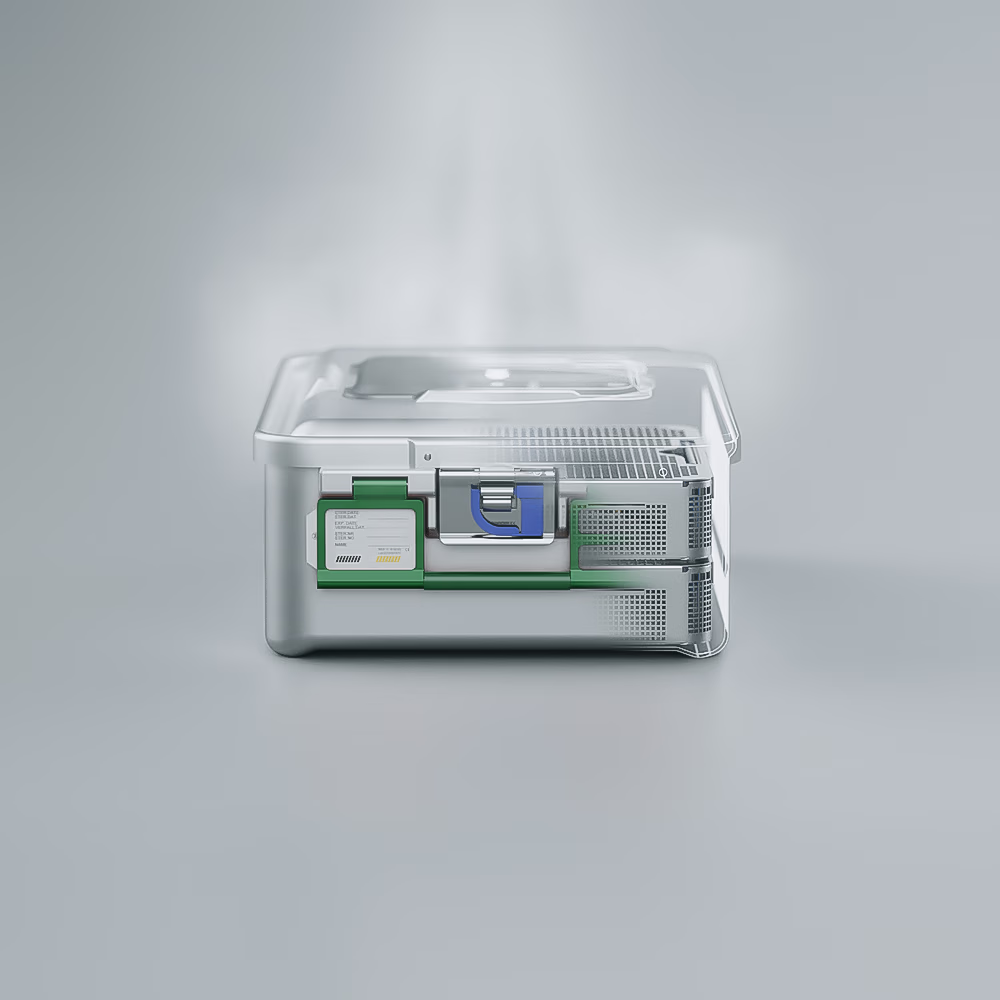
Opened, separated and washed in a validated washer-disinfector. Detergents between pH 7 and 10.5, then a final rinse in demineralized water.
Steam at 134 °C, or H₂O₂ vapor at low temperature for sensitive instruments. The container is built for both.
Dry and sealed, the set stays sterile for up to twelve months. Stored at 15–26 °C and 30–50% relative humidity.
Gaskets are renewed every 500 cycles, filters on schedule. Cared for this way, one container serves for years. Then the cycle begins again.
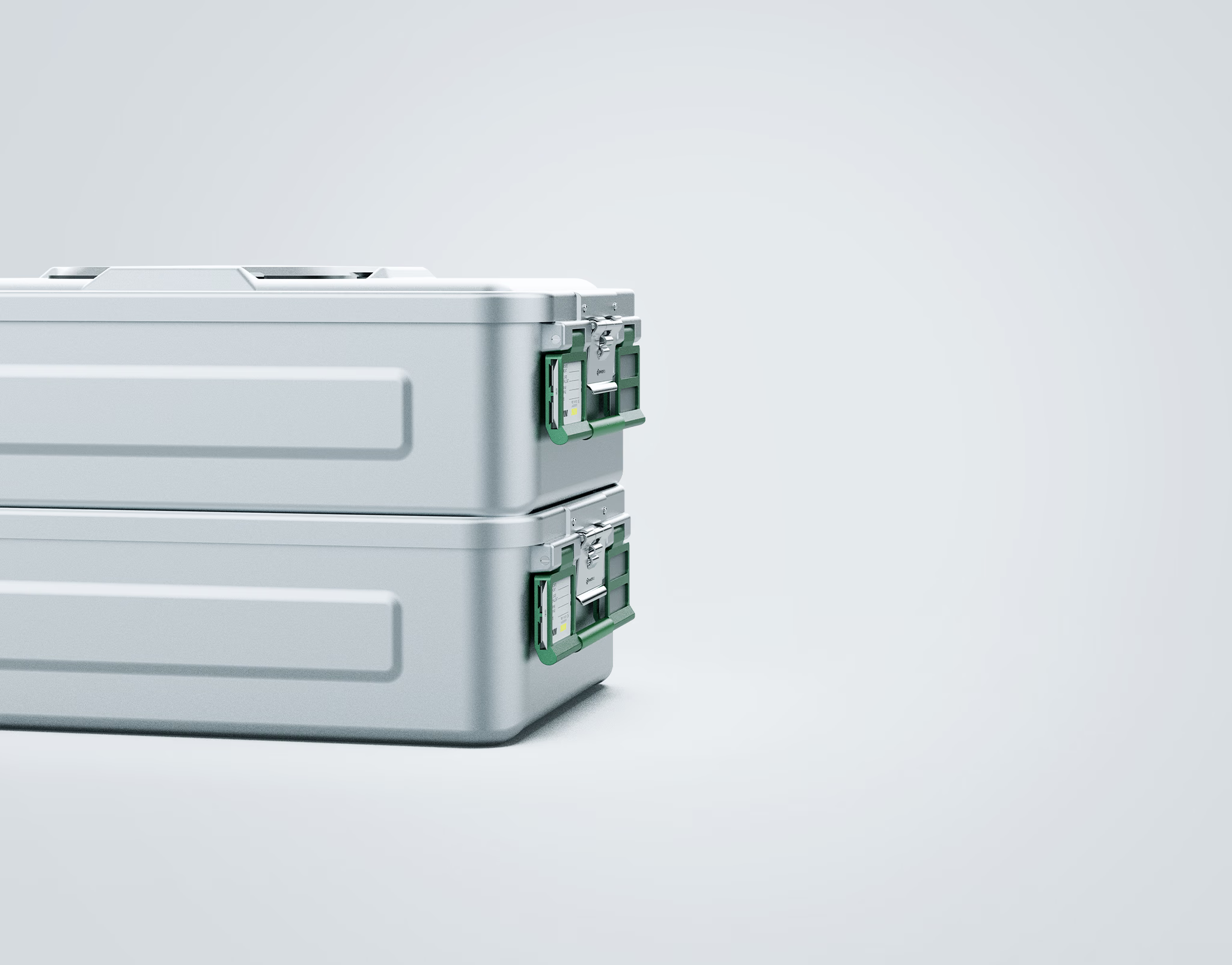
Sustainable reprocessing